Sam Altman warns staff of difficult months ahead as Google and Anthropic increase pressure on OpenAI.
Google’s Gemini 3.0 reaches hundreds of millions of users through deep product integration, strengthening its advantage.
Altman remains confident in OpenAI’s long-term strategy despite financial headwinds and rising competition.
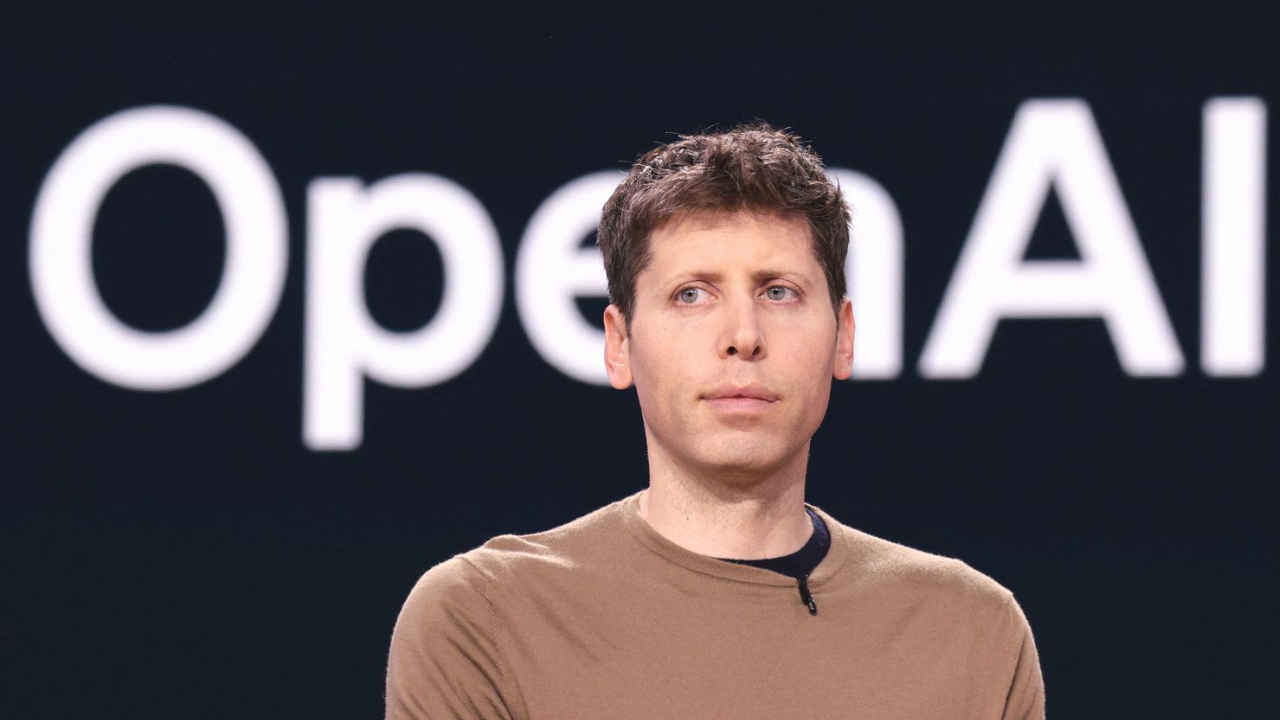
OpenAI CEO Sam Altman has told staff that the coming months may be challenging as the company faces growing competition from Google and other major AI players. In a memo obtained by The Information, Altman said that Google’s recent announcements, particularly its most advanced AI systems, including the so-called Gemini 3.0 model, have shifted the competitive dynamics in the industry. He explained that these developments have not only altered the pace at which the sector is moving but have also raised the bar for everyone involved in advanced AI research. He added that other firms, such as Anthropic, are also making rapid progress, further intensifying the global race. As highlighted in the report, Altman reportedly told staff that rivals are ‘closing the gap’, even though he believes OpenAI is still moving quickly and remains well-positioned. Altman urged employees to remain focused on OpenAI’s long-term mission, noting that while the company may face some financial pressure in the near term, it continues to move at a faster pace than most rivals and remains committed to innovation at scale.
 Survey
Also read: Zoho Notebook: Smart AI, good design, but is it a powerhouse?


Google’s Gemini 3.0 has already been integrated across Google Search, Workspace, Android, and other major services, reaching over 650 million monthly users. This deep ecosystem integration gives Google a major advantage, as people interact with the AI daily without actively seeking it out or even realising that they are using an advanced model behind the scenes. Altman highlighted that such scale and distribution translate into strong economic and technical leverage, making OpenAI’s competitive landscape more demanding and, at times, more unpredictable. He noted that Google’s ability to embed its AI services directly into widely used products gives it a powerful head start, which OpenAI must work harder to counter. The report also pointed out that Altman acknowledged Google’s scale provides a sizeable economic advantage, particularly as Google weaves its Gemini technology deeper into its ecosystem, allowing billions of users to encounter its AI capabilities by default.
OpenAI is also contending with rising competition from Anthropic, whose Claude assistant has become particularly strong in coding-related tasks and is gaining attention among developers and enterprises. In response, OpenAI has been working to upgrade its Codex technology in an effort to maintain its edge in AI-assisted programming, which remains one of the most important and commercially relevant areas of the AI industry. Altman acknowledged that the gap between the companies is narrowing, but he reiterated that OpenAI’s rapid research pace, strong technical foundations, and focus on pushing the boundaries of what is possible remain key strengths in staying ahead. He emphasised that competition, while challenging, is also a sign of a healthy and evolving market. According to the memo, Altman also stated that ‘having most of our research team focused on really getting to superintelligence is critically important, even if balancing research, product and infrastructure simultaneously “s**ks” at times’. He remarked that despite the difficulty, he ‘wouldn’t trade positions with any other company’.
Also read: Vivo X300 vs iQOO 15: Price, camera, performance, display and everything we know so far
The memo also pointed to potential short-term economic challenges, with investor sentiment cooling as the AI market becomes more crowded and funding expectations shift. Altman stressed, however, that any financial pressures would be temporary. He said OpenAI is well-resourced and continues to invest heavily in research and infrastructure to secure its long-term advantage. Despite rising operational costs and an increasingly competitive environment, the company remains on track to meet its 2025 revenue target of $13 billion, which he described as an encouraging sign of stability amid rapid industry change. He warned, however, that sentiment outside the company may be ‘rough’ for a period and referred to these challenges as ‘temporary economic headwinds’, according to reports based on the memo.
Altman encouraged employees to stay committed to OpenAI’s broader ambitions. He noted that much of the research team is now working on superintelligence, which he described as a crucial long-term priority that will define the next era of AI development. While he admitted that managing research, infrastructure, and product development at the same time is challenging, he said he remains proud of the company’s position, technical progress, and continued ability to attract world-class talent. He also emphasised that OpenAI must continue building the best research lab, the best AI infrastructure company, and the best AI platform and product company simultaneously, something he described as difficult, but unavoidable given OpenAI’s mission.
Also read: LG Gaming Portal brings cloud gaming to webOS TVs in India, along with official Xbox app support
Ultimately, while Google has gained fresh momentum with Gemini 3.0, Altman’s memo underscores OpenAI’s confidence in its research, its innovation pipeline, and its ability to remain a leading force in the global race for artificial intelligence.
 Follow Us
Bhaskar Sharma
Bhaskar is a senior copy editor at Digit India, where he simplifies complex tech topics across iOS, Android, macOS, Windows, and emerging consumer tech. His work has appeared in iGeeksBlog, GuidingTech, and other publications, and he previously served as an assistant editor at TechBloat and TechReloaded. A B.Tech graduate and full-time tech writer, he is known for clear, practical guides and explainers. View Full Profile


